



Zippers for Bags, Wallets, Pouches and Pockets
-1-100x100.png "Nylon Pocket Zipper with 13 cm Bottom - NC0013T5")
-1-100x100.png "8 Inch #5 Black Bottom Stop Reversible Zipper – Combi Pull Nylon Zipper - ZP0020T10C")
-1-100x100.png "4 Inch Nylon Pocket Zipper with Stop - NC0010#3")
-1-100x100.png "Nylon Pocket Zipper with 12 cm Bottom - NC0012T5")
-1-100x100.png "Nylon Pocket Zipper with 15 cm Bottom - NC0015T5")
-1-100x100.png "20-Piece Black #3 Closed-End Zipper Set for Bags and Wallets ST-0001T5")
Bag and Leather-Goods Zipper Selection
A zipper affects the shape, usability and finish of a bag or wallet. Small leather goods generally require a compact and flexible closure, while backpacks and equipment cases may require a wider chain, stronger tape and a slider designed for repeated use.
This category is intended for handbag makers, leather-goods workshops, bag manufacturers, alteration professionals and craft users looking for ready-length or continuous zipper solutions.
Which Zipper Fits Each Product?
| Product | Typical Zipper Choice | Production Check |
|---|---|---|
| Wallet or coin purse | Short #3 closed-end coil zipper | The closure should remain flexible when the wallet is folded. |
| Pencil case or cosmetic pouch | #3 ready-length or continuous coil chain | Plan the bottom stop and slider installation method. |
| Handbag opening | #3 or #5 closed-end coil zipper | Measure the curved seam and lining allowance. |
| Backpack or sports bag | #5 coil or suitable molded zipper | Match the chain and tape to expected load and fabric layers. |
| Tablet or equipment case | Flexible continuous chain | Test movement around corners before bulk production. |
| Inner security pocket | Short low-profile closed-end zipper | Avoid unnecessary weight inside the lining. |
Why Closed-End Zippers Are Common in Bags
A closed-end zipper has a fixed bottom stop and does not separate into two tape halves. This format suits wallets, pouches, pencil cases, bag compartments and garment pockets.
Browse additional constructions in the closed-end zipper category.
Choosing Between #3 and #5 Coil Zippers
A #3 zipper provides a lower-profile chain and is commonly considered for wallets, inner pockets and smaller pouches. A #5 zipper has a larger chain profile and may be considered for handbags, backpacks, cases and applications needing a more visible closure.
The nominal number is only one selection factor. Tape width, chain profile, slider compatibility and product construction must also be verified.
Compare chain constructions in the coil zipper category.
Ready-Length and Continuous Chain
Ready-Length Zippers
Ready-length zippers arrive with a defined functional length, slider and prepared end construction. They simplify repeat production when every wallet, pocket or pouch uses the same measurement.
The 12 cm / 4.72 in #3 closed-end coil zipper is an example of a compact closure intended for wallets and pockets.
Continuous Zipper Chain
Continuous chain allows a workshop to cut different lengths for bags, cases and organisers. It is useful when product dimensions vary across a collection.
The production plan must include sliders, stops, cutting allowance and expected material loss. Continuous chain should not be treated as a finished zipper until these operations are completed.
Slider and Puller Selection
The slider joins and separates the zipper chain. The puller is the part held by the user. A decorative puller can change the appearance of a product, but it does not determine whether the slider fits the chain.
Available mechanisms can be reviewed in the zipper slider category.
Bag Zipper Length Guide
| Length | Example Use | Workshop Note |
|---|---|---|
| 10–16 cm / 3.94–6.30 in | Wallet, coin section and small inner pocket | Use a chain profile that preserves product flexibility. |
| 15–25 cm / 5.91–9.84 in | Pencil case, cosmetic pouch and compact case | Ready-length and continuous options may both be suitable. |
| 25–40 cm / 9.84–15.75 in | Handbag and organiser | Test curved sewing lines on a sample. |
| 40–60 cm / 15.75–23.62 in | Backpack or large equipment compartment | Check tape strength and slider arrangement. |
| Cut-to-length | Multi-size workshop production | Include sliders, stops and cutting waste in material planning. |
Double Sliders and Combi Construction
A large bag compartment may use two sliders on a closed-end chain. This allows the compartment to open from the centre or from either side.
This construction is not automatically a combi zipper. A combi zipper is a two-slider, open-end separating zipper that can open from the lower section and whose tapes can detach completely.
Common Production Errors
- Do not choose chain strength by size number alone.
- Do not begin bulk production without testing slider-chain compatibility.
- Do not use an oversized chain on a compact folding wallet.
- Do not measure a curved opening as a straight line.
- Do not treat continuous chain as a finished zipper without end preparation.
- Do not call every two-slider bag zipper a combi zipper.
- Do not claim full waterproofing from a coated zipper alone.
Frequently Asked Questions
Which zipper size is commonly used for wallets?
Compact wallets often use a low-profile #3 closed-end coil zipper. The final choice should match the wallet thickness, fold and intended appearance.
When should a #5 zipper be considered for a bag?
A #5 zipper may be considered for handbags, backpacks and cases requiring a larger chain profile. Fabric layers, load and slider type must also be checked.
What is the advantage of continuous zipper chain?
Continuous chain allows a workshop to cut several zipper lengths from one stock, which is useful for collections containing bags and cases in different sizes.
Does every slider fit a zipper with the same size number?
No. Chain profiles and production tolerances can differ. Compatibility must be confirmed with the actual slider and zipper chain.
Can a bag zipper have two sliders?
Yes. A closed-end bag zipper may use two sliders for easier access. Two sliders do not automatically make it an open-end or combi zipper.
How should a curved bag opening be measured?
Measure along the actual sewing path after seam allowances, using the pattern or a flexible measuring tool rather than a straight outer dimension.
Is a coated zipper fully waterproof?
No. The finished product also depends on fabric, seams, stitch holes, zipper ends and installation details.
Last updated: July 21, 2026
Business: E-Zippers — zipper, slider and textile accessory supplier, Istanbul, Türkiye.
-1-350x450h.png "4 Inch Nylon Pocket Zipper with Stop - NC0010#3")
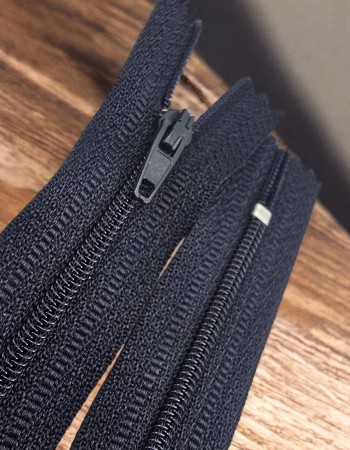
-1-350x450h.png "Nylon Pocket Zipper with 12 cm Bottom - NC0012T5")
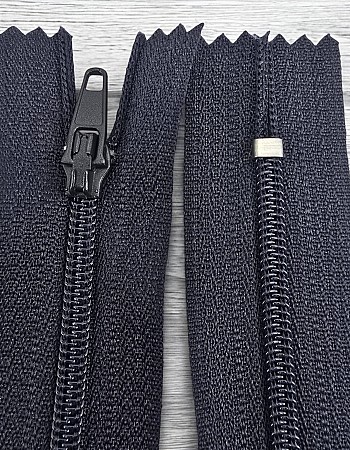
-1-350x450h.png "Nylon Pocket Zipper with 13 cm Bottom - NC0013T5")
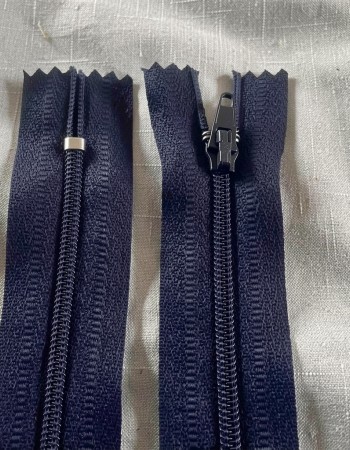
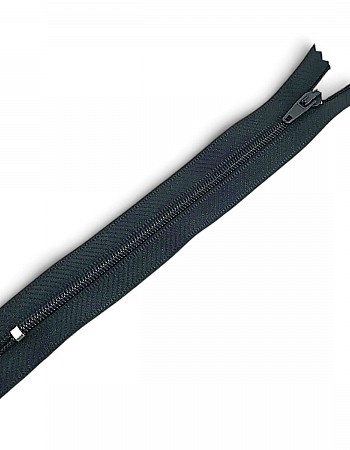
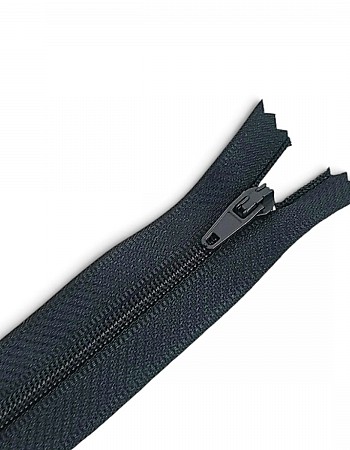
-1-350x450h.png "Nylon Pocket Zipper with 15 cm Bottom - NC0015T5")
-1-350x450h.jpg "Nylon Pocket Zipper with 15 cm Bottom - NC0015T5")
-1-350x450h.jpg "Nylon Pocket Zipper 16 cm Combi Handle Bottom - NC0016T10C")
-1-350x450h.jpg "Nylon Pocket Zipper 16 cm Combi Handle Bottom - NC0016T10C")
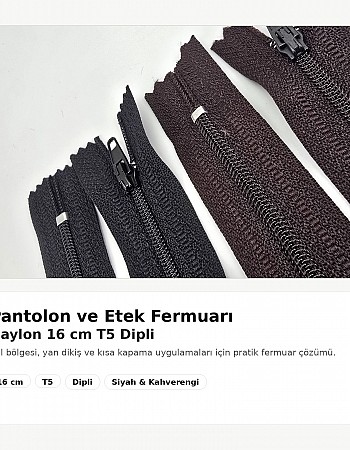
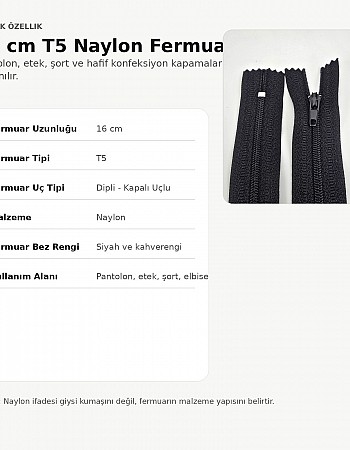
-1-350x450h.jpg "Nylon Pocket Zipper 16 cm with Special Handle and Bottom - NC0016T5Ö")
-1-350x450h.jpg "Nylon Pocket Zipper 16 cm with Special Handle and Bottom - NC0016T5Ö")
-1-350x450h.png "8 Inch #5 Black Bottom Stop Reversible Zipper – Combi Pull Nylon Zipper - ZP0020T10C")
-1-350x450h.jpg "8 Inch #5 Black Bottom Stop Reversible Zipper – Combi Pull Nylon Zipper - ZP0020T10C")
-1-350x450h.png "20-Piece Black #3 Closed-End Zipper Set for Bags and Wallets ST-0001T5")
-1-350x450h.png "20-Piece Black #3 Closed-End Zipper Set for Bags and Wallets ST-0001T5")