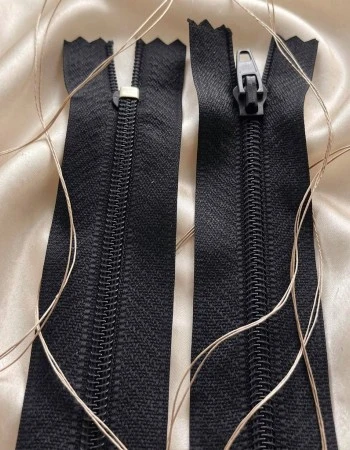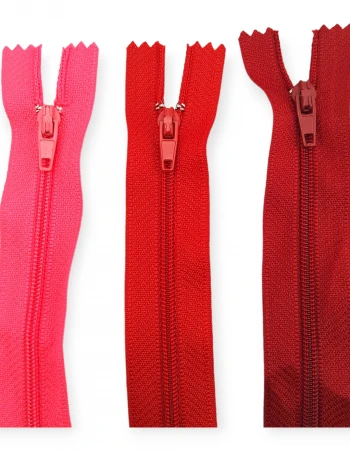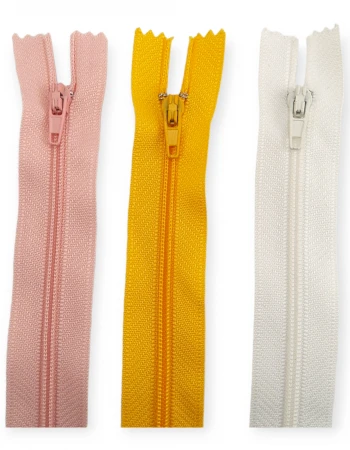
Closed-End Zippers for Bag, Garment and Home Textile Manufacturing
Closed-End Zipper Sourcing for Manufacturing
Closed-end zipper performance depends on the chain, slider, bottom stop, tape, sewing method and load of the finished product.
Two zippers with the same length can use different chain profiles and slider geometries. Approve the actual zipper on the production fabric before bulk sourcing.
Selection by Production Area
| Production Area | Zipper Approach | Workshop Check |
|---|---|---|
| Wallet and small accessory | 10–18 cm / 3.94–7.09 in #3 nylon coil | Check curves, slider bulk and the usable opening. |
| Trousers and skirts | 14–25 cm / 5.51–9.84 in nylon, invisible or metal zipper | Approve the fly, waist and hip opening from the real pattern. |
| Jacket and coat pocket | #5 coil, molded or coated zipper | Test chain bulk, fabric layers and pull-tab access. |
| Dress and formalwear | Invisible closed-end zipper | Test the outer fabric, lining, interfacing and embellishment. |
| Bag and luggage | Ready-length or dual-slider closed-end chain | Check slider direction, corners and top and bottom finishing. |
| Cushion and upholstery cover | Finished continuous nylon coil chain | Provide enough opening to remove the inner filling. |
| Technical bag and case | Coated closed-end zipper | Test the film, stitch holes, slider junction and ends. |
Required Product Specification
- Zipper Length: Functional chain length in metric and imperial units
- Zipper Size: #3, #5 or another verified profile
- Chain Construction: Nylon coil, invisible coil, molded plastic or genuine metal
- Zipper End Type: Closed-end / bottom stop
- Slider Configuration: Single slider or two sliders
- Pull-Tab Configuration: Single pull, double pull or custom pull
- Bottom Stop: Metal, plastic or sewn finish
- Sales Format: Individual, package, set or continuous chain
End Type and Slider Count
Closed-end describes the lower construction. Slider count is a separate mechanical feature.
A closed-end zipper may use one slider or two sliders. Bags, luggage and equipment cases can use two sliders on one joined chain.
A dual-slider closed-end zipper is not a combi or two-way separating zipper.
Slider and Pull-Tab Terminology
The slider is the mechanical body that opens and closes the chain. The pull tab is the component held by the user.
Product data should distinguish:
- Single-slider zipper
- Dual-slider zipper
- Single-pull slider
- Double-pull slider
- Custom pull tab
Browse mechanisms in the zipper slider category.
Nylon, Molded Plastic and Metal Chains
Nylon coil uses a continuous spiral element. Molded plastic uses individual plastic teeth. Genuine metal zippers use documented metal chain elements.
These systems require different slider-channel geometries. A shared nominal size does not guarantee compatibility.
Invisible Zippers Within the Closed-End Category
Standard garment invisible zippers are closed-end. Their folded coil and specialised slider differ from standard coil zippers.
Invisible products can remain linked to both this category and the dedicated invisible zipper category.
Finishing Continuous Chain as Closed-End
After cutting continuous chain, install compatible sliders and prepare secure upper and lower stops. Depending on the product, the stop can be metal, plastic or a reinforced sewn finish.
A sewn bottom stop must be tested under the intended opening cycles, load and care process.
Bottom-Stop Inspection
- Is the bottom stop secured to the chain?
- Can the slider move beyond the stop?
- Does the stop damage the fabric or lining?
- Does a sewn stop loosen under load?
- Is the coating or finish damaged during installation?
- Do two sliders jam at the lower end?
Pre-Production Inspection
- Does the functional length match the pattern?
- Does the slider run smoothly across the full chain?
- Does the chain reopen behind the slider?
- Does the bottom stop remain secure after repeated use?
- Does the tape ripple after sewing?
- Do curves or corners restrict slider movement?
- Does the chain or coating remain stable after care testing?
Category Acceptance Rules
A product should enter this category when a fixed bottom stop keeps both tapes joined and complete tape separation is not possible.
The following products should remain in separate categories:
- Open-end separating jacket zippers
- Two-way separating outerwear zippers
- Unfinished continuous zipper chain
- Individual sliders and pull tabs
Common Manufacturing Errors
- Do not classify a closed-end zipper as open-end or separating.
- Do not describe every closed-end zipper as nylon.
- Do not classify dual-slider closed-end chain as combi.
- Do not combine slider count and pull-tab count.
- Do not combine invisible coil and standard reverse coil.
- Do not classify metallic-look chain as genuine metal.
- Do not claim full waterproofing without test data.
- Do not describe unfinished continuous chain as a completed zipper.
Frequently Asked Questions
How should a workshop test a closed-end zipper?
Sew the zipper into the real fabric and pattern, then inspect slider movement, the bottom stop, seam alignment, curves and care performance.
Can a closed-end zipper have two sliders?
Yes. Bags, luggage and cases may use two separate sliders, but this construction is not a combi open-end zipper.
Is an invisible zipper closed-end?
Standard dress and skirt invisible zippers are closed-end and keep both tapes joined at the bottom stop.
How is a bottom stop added to continuous chain?
A metal or plastic stop can be installed, or a reinforced sewn finish can be prepared for the intended product load.
What happens if the bottom stop breaks?
The slider may leave the chain and the zipper can become unusable. The stop must be repaired or the zipper replaced.
How should closed-end zipper set contents be verified?
Check the written package details for total quantity, lengths, chain construction, color distribution and slider count.
Last updated: July 22, 2026
Business: E-Zippers — zipper, slider and textile accessory supplier, Istanbul, Türkiye.
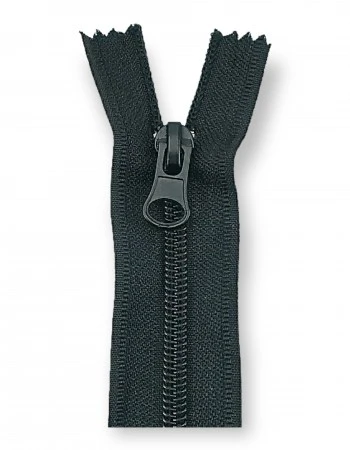
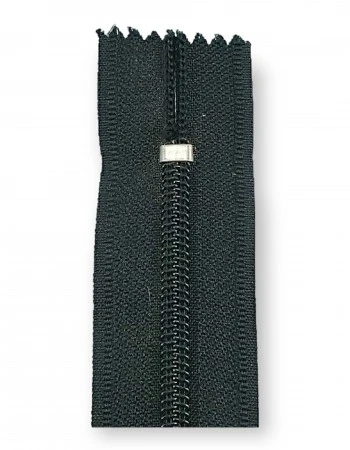
-1-350x450h.webp "4 Inch Nylon Pocket Zipper with Stop - NC0010#3")
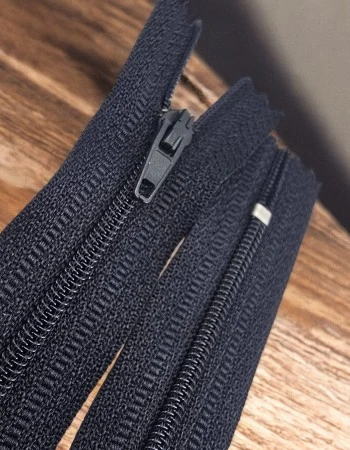
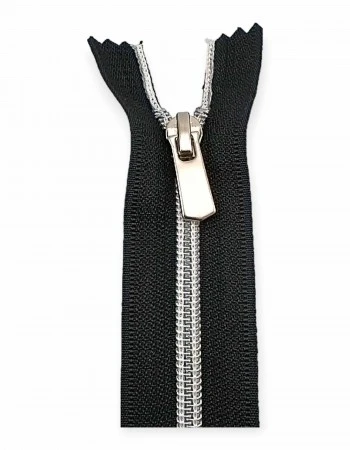
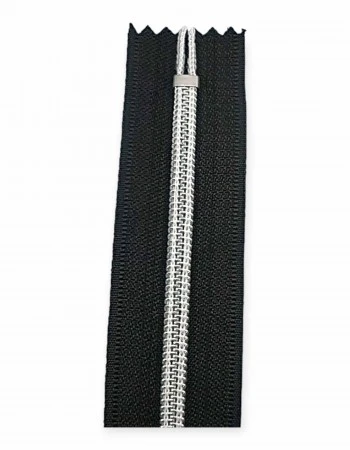
-1-350x450h.webp "Nylon Pocket Zipper with 12 cm Bottom - NC0012T5")
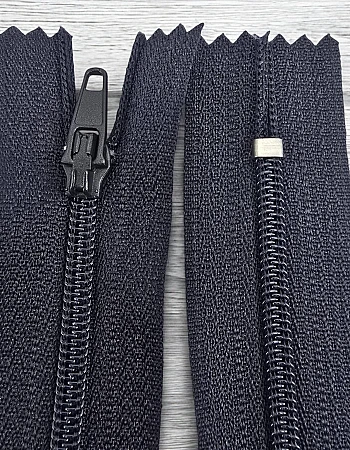
-1-350x450h.webp "Nylon Pocket Zipper with 13 cm Bottom - NC0013T5")
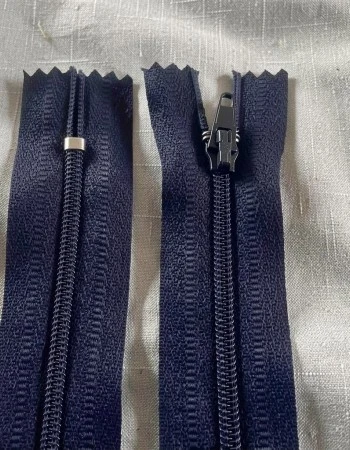
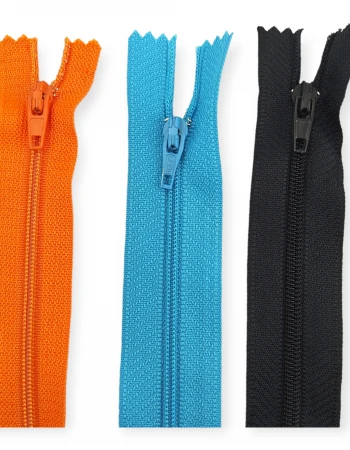
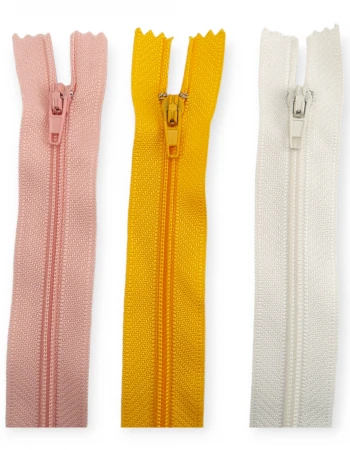
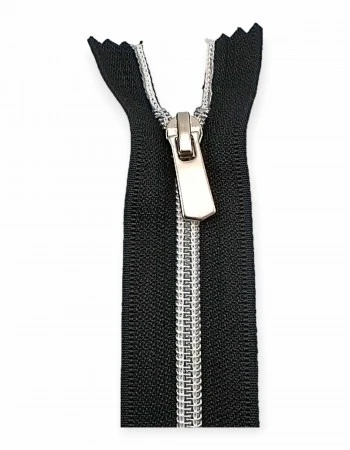
-1-350x450h.webp "Nylon Pocket Zipper with 14 cm Bottom - NC0014T5")
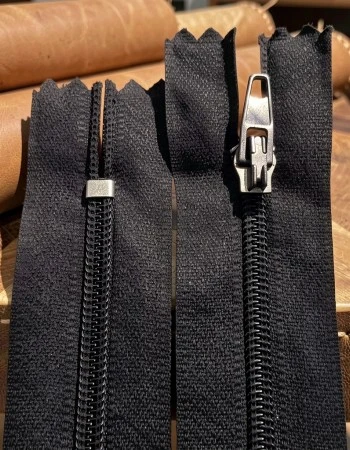
-1-350x450h.webp "Nylon Pocket Zipper with 15 cm Bottom - NC0015T5")